Company News: Green Street Expands Australian Coverage with Private Market Research and Data Across Five Markets and Three Sectors.


Infrastructure Energy Finance: Power, Politics, Patience
Everyone asks whether there is enough capital for infrastructure energy finance. Capital is plentiful. Power, certainty, and contract structure are not.
Green Street Infrastructure, formerly IJGlobal, hosted its inaugural Infra Energy Finance USA in Dallas on October 13–14, 2026. More than 300 registrants joined sessions across three tracks (Core, Digital, and Energy Infrastructure) under one theme: financing America’s infrastructure from origination to exit.
The takeaway held in every room. The money exists. What’s needed is a grid connection, a credible schedule, and a contract that survives a bad cycle. Capital is sorting itself around those gaps, and the sorting is not gentle.
Where Is Infrastructure Energy Finance Capital Going in 2026?
Into digital infrastructure first, then into the power that feeds it. Digital now accounts for about half of the infrastructure finance value Green Street Infrastructure has tracked this year. Money is the easy part.
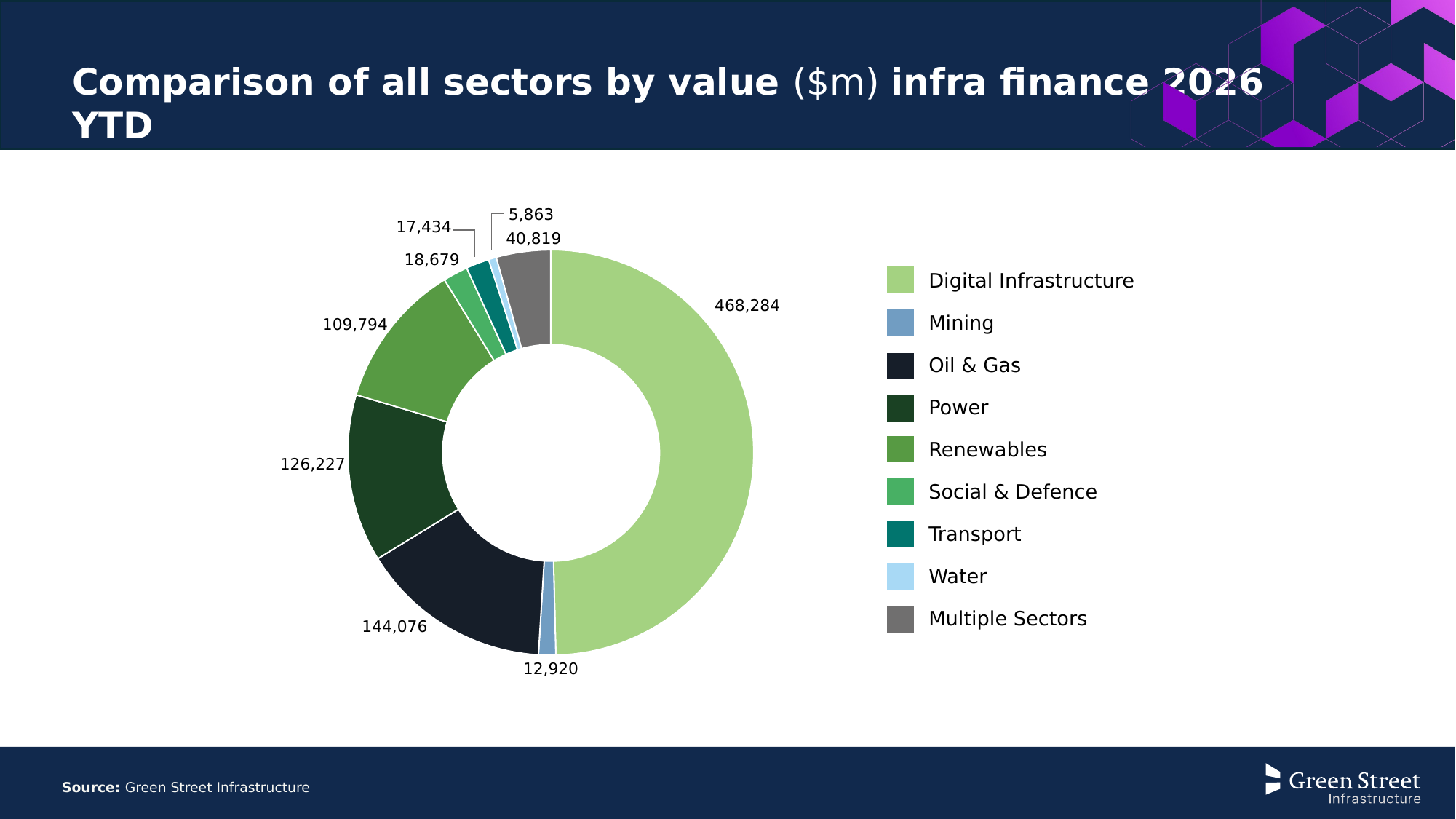
Figure 1: Infrastructure finance value by sector, 2026 year to date. Source: Green Street Infrastructure
The two halves of that market no longer sit apart. Panelists in the energy track made the point from the other side: the data center, digital, and power value chains have merged, and the same banks and funds now underwrite both.
Digital demand is everywhere. Supply is not.
Richard Neale, Chief Product Officer at Green Street, opened the digital track with the case:
- Demand: Data center demand is broad. Green Street’s demand map traces it to more than a dozen forces, from cloud computing, streaming, and e-commerce to 5G, telehealth, and autonomous vehicles, with AI pushing hardest. Revenue at the big cloud providers has kept pace with the spending so far. Whether it turns into profit is still the open test.
- Supply: U.S. third-party landlord capacity is growing at close to 10% a year through 2030, with Europe at a similar clip from a smaller base. By 2030 the U.S. figure is a multiple of its 2020 level.
- Capex: Five hyperscalers went from relatively light spenders to the biggest capital budgets in the market. 2026 spending is several times the 2020–2023 average.
Power cost matters, though it does not pick the winner alone. The biggest data center markets, Dallas–Fort Worth, Atlanta, and Phoenix among them, pair scale with cheaper electricity, and Dallas is winning. Demand is there. Megawatts are the problem: the open question is whether capital can turn demand into energized capacity.
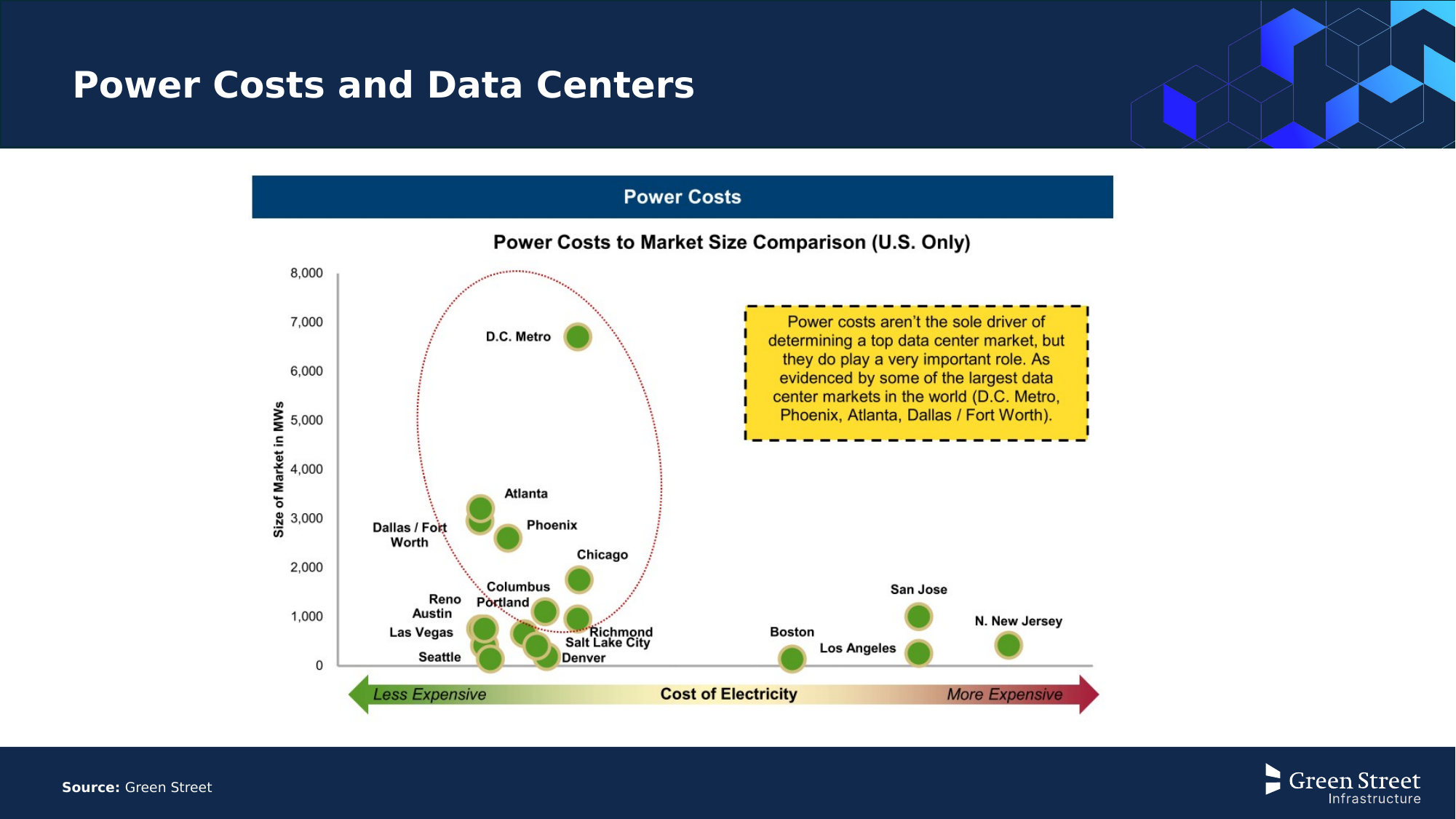
Figure 2: Power Costs and Data Centers. Source: Green Street Infrastructure
Capital is climbing the value chain.
Jonathan Carmody, Head of Americas – Infrastructure at Green Street, saw the same pattern in the room. Rather than fight over hyperscale assets priced at tens of millions of dollars per megawatt, capital is moving to the services around them: firms that help GPU-as-a-service operators deploy chips, and firms that service the electrical and cooling systems inside the buildings. LP pressure to deploy is real, and the services layer is a cheaper way into the same demand tailwind.
Institutional investors are screening harder for the assets that do get funded. They want platforms that are hard to replace, realistic to build, and able to adapt. Adaptability carries the terminal value argument: rack densities have multiplied in five years and the next chips will multiply them again, so a building designed around one chip generation faces a very different refit bill.
Debt follows the same logic. Investment-grade bonds have funded most of the AI build-out, with leveraged loans, high yield, and securitization a distant second and third. On construction loans, the modest premium private credit charges over bank project finance matters less than dealing with one decision-maker instead of a large bank syndicate when a tenant changes the scope. Speed and flexibility are being priced ahead of the cheapest coupon.
Where Do Data Center Owners Exit?
In the public market, and nowhere else at scale. The listed data center REITs are too small to buy the platforms in the pipeline, and a private-to-private deal that size is unlikely.
“It is my belief that the billions of dollars that have poured into data center development, M&A, and platform building over the last decade will likely see their exit in the form of the public market,” said Daniel Ismail, Managing Director, Research, Green Street.
The queue is already deep. The data center names lined up to list are worth several times everything that has listed this year, and a separate queue of neoclouds sits behind them. Then markets turned risk-averse in early October, and several of the largest names pushed their timelines.
The first two 2026 listings tell the story. Both trade below their IPO price and below Green Street’s NAV. Csquare, which carries nearly twice the leverage of Equinix and Digital Realty, trades at a deep discount. BXDC, Blackstone’s net lease vehicle, sits closer to NAV but has announced no acquisitions as of the second quarter. Private capital built the sector. The public market will decide what it is worth.
The market is not punishing data centers. It is punishing leverage and development risk. Stabilized, low-leverage platforms have done fine: data center REITs have beaten the broader REIT index over one, three, five, and 10 years. Green Street’s REIT data and research tracks those NAV premiums and discounts across listed platforms.
Net lease buyers help at the margin, not at scale. Realty Income’s CloudHQ joint venture is the largest net lease data center deal so far, and it is small against the queue. Green Street estimates spot values for real assets have slipped a few percent as base rates rose. Stabilized data centers still screen well, but the cushion is thinning: a cap rate around 6% now sits at or below most debt costs, so levered returns depend on NOI growth. If rates stay elevated, valuations face more pressure.
The listings that work will look like REITs: stabilized, leased, and modestly levered. Development-heavy platforms should expect to price at a discount to private values, or wait. Private markets still own most commercial real estate, so listing is a capital-recycling route for stabilized assets, not a takeover of the sector.
Energy Infrastructure: Scale Wins, Small Developers Struggle
Energy dominated Dallas, and the word that kept coming back was divergence. Tariffs, supply chain disruption, interconnection delays, and unresolved federal tax credit policy are squeezing margins and stretching timelines. Platforms with procurement expertise, management depth and portfolio scale absorb the hit. Smaller developers do not:
- Project finance: U.S. renewables and conventional energy project finance climbed every year from 2022 through 2025, and Texas leads closed deals in renewables, power, and midstream.
- Tax credits: Tax equity and tax credit funding on closed deals has cooled so far this year compared with last year, and unresolved federal tax credit policy was a recurring concern across the energy panels.
- Capital mix: Private capital is flowing to proven or near-proven options such as advanced gas, storage, and next-gen solar, while SMRs, green hydrogen and some offshore wind remain more narrative than financeable.
Scale wins the M&A market.
One independent power producer (IPP) executive put most of the gigawatts under development in the hands of smaller players, which makes consolidation a matter of when. Green Street Infrastructure data shows it starting in power, where closed deals are fewer and larger. Renewables M&A has not moved the same way; it is still mostly small, asset-by-asset deals. Power buyers are writing bigger checks. Renewables buyers are still shopping for pieces. The same executive described sellers who went out for common equity and came back with preferred structures and warrants, and expects 2027 to be more constructive for common equity. Higher power purchase prices help offset some of the rate pressure.
What binds a project first.
- Interconnection: Study queues swelled as renewables, storage, and data center load requests hit utility planning teams at once. Reform is arriving through collateral deposits and cluster studies, with PJIM and ERCOT the ones to watch. Panelists warned that large-load queues overstate real demand, because everyone applies for everything and builds only some of it.
- Equipment and labor: Turbines, EPC labor, and long-lead items trip up behind-the-meter builds more often than land or gas supply, and off-takers want equipment on order and deposits down before they sign.
- Cost of speed: Behind-the-meter power costs far more than grid power, and hyperscalers are paying it rather than wait years for a connection.
- Permission: Community consent has overtaken power as the first speed bump for data center campuses, according to a QTS executive, and developers now engage towns from day one. Panelists also pointed to a reported Texas pause on behind-the-meter permitting.
- Credit: At least one infrastructure fund on the panel has stopped underwriting projects with neocloud counterparties.
Every one of these is a schedule risk, and schedule risk is what lenders price first. More capital will not fix structural bottlenecks. Regulation, market design, and supply chains set the pace.
Core Infrastructure: Structure Determines the Outcome
The U.S. is the biggest project finance market in the world, roughly half of global value across 2025 and 2026 so far, and North America infrastructure finance has climbed sharply since 2022, according to Green Street Infrastructure data.
Public-private partnerships (P3s) are the opposite: small and lumpy. A dozen or so closed deals a year, most of them in transport, with value that swings sharply from year to year. Globally, transport is the bulk of P3 value, with social and defense infrastructure and water far behind.
State and municipal governments are building capacity with federal counterparts to design contracts that attract genuine private interest while delivering services to constituents. A market this thin cannot afford bad precedent. Every contract becomes the template for the next.
What to Watch in Infrastructure Energy Finance Into 2027
Five questions will sort the winners from the rest, and we are watching how each one unfolds. Will stabilized, modestly levered data center platforms list near net asset value while development-heavy names wait? Can debt markets absorb multi-gigawatt projects if rates stay high? Will interconnection reform and behind-the-meter rules get load connected faster? Does policy clarity arrive in time for common equity to return to energy M&A? And will the next wave of state and municipal P3 contracts hold up, or store up problems? Each one is a test of certainty, and certainty is what capital is paying for.
Green Street Infrastructure follows infrastructure energy finance deal by deal. Explore infrastructure investment intelligence across news, data, and research, or request a Green Street demo to get answers.